Showing posts with label Dr. Mercola. Show all posts

Sunday, December 31, 2017

Mercola RePost: Bad Science / Bad Medicine Pedaled as Good Deeds

From time to time, I like to offer these reprints from the mercola.com website because I agree with Dr. Mercola's analyses of health, fitness, and medical politics. His articles are well-researched and logical. And, like me, Dr. Mercola doesn't simply take the word of the "powers that be" concerning what constitutes good and bad science and medicine. 

Ghost in the Machine, Part 5 — Lies, Denial, Deceit and Manipulative ‘Research’

Story at-a-glance

  • Vaccines are Big Pharma's new profit center, which has caused an onslaught of manipulative, dishonest “research”
  • The Bill & Melinda Gates Foundation enriches pharmaceutical corporations and wealthy institutions with its questionable overseas vaccination agenda
  • To fight a growing number of people questioning the safety and effectiveness of vaccines, the drug industry discredits vaccine injury statistics and has rolled out an aggressive and shocking ad campaign
By Dr. Mercola
In the last decade, vaccines have become Big Pharma's biggest profit center. A report published by MarketsandMarkets estimates the global vaccine market, currently valued at $34.30 billion a year, will grow to an astounding $49.27 billion by 2022.1
Why the boom? As blockbuster drugs like Lipitor, Viagra, Seroquel, Zyprexa, Singular and Concerta have gone off patent, vaccines prove a lucrative replacement. Not only are they priced much higher than pills, governments and NGOs shamelessly help market vaccines to huge swaths of the world's population.
These unethical partnerships, using taxpayer or NGO money, advance misleading research intended to frighten the public. Worse, they discredit vaccine critics who raise legitimate safety and efficacy questions and even discredit the families and victims of vaccine injuries themselves. To cash in on vaccine profits Big Pharma, governments and NGOs have characterized all vaccines as "life-saving." One of the clearest examples is the attempt to present vaccines against the HPV virus as vaccines "against cancer."
"Science" articles warn that as many as 90 percent of adults, especially baby boomers, silently harbor the HPV virus much like articles that warn many baby boomers are infected with the Hepatitis C virus.
In both cases, the drug industry is trying to "grow" the market for its products by inflating the amount of estimated sufferers. Reporters either wittingly or unwittingly help in the effort by repeating the drug industry supplied "facts." The truth is more than 90 percent of HPV infections are cleared by the body2 without symptoms and only 20 percent of HPV infections are the high-risk type that could develop into cancer if not identified and treated.3
Big Pharma's misleading advertising is not working, though. Many families of adolescent boys and girls targeted by HPV vaccine marketing by drug companies and government health officials are refusing the vaccine.4
Reacting to the HPV vaccine dropouts, Big Pharma launched an offensive "shame" campaign last year in which young adults with cancer blame their parents for not vaccinating them when they were adolescents. The ads were so over-the-top even supporters of the vaccine complained. Twitter remarks accused the company of trying to guilt-trip parents to bolster corporate profits.5

The Bill & Melinda Gates Foundation Promotes Vaccines and Their Profits

One of the world's leading funders of vaccine development and promotion is the Bill & Melinda Gates Foundation (B&MGF).6 In 2002, it began buying billions in drug stocks7 and subsequently added huge amounts of Monsanto stock.8 Two of the B&MGF's research heads were hired right out of Pharma — one from GlaxoSmithKline, with whom the B&MGF had a long-standing collaboration, and the other from Novartis.9
Even more shocking, it hired the former president of product development at Genentech to serve as its current CEO, Dr. Susan Desmond-Hellmann.10 This is how health writer Ruben Rosenberg Colorni describes the true nature of the foundation:11
"The Bill & Melinda Gates 'Foundation' is essentially a huge tax-avoidance scheme for enormously-wealthy capitalists who have made billions from exploiting the world’s people. The foundation invests, tax free, money from Gates and the 'donations' from others, in the very companies in which Gates owns millions in stocks, thus guaranteeing returns through both sales as well as intellectual-property rights.
To add insult to injury, the system perpetuates the spread of disease rather than aids in their eradication, thus perpetually justifying his endeavors to “eradicate” them (solving a problem they are creating)."
In a 2011 Forbes interview, Bill Gates admitted the new profitability of vaccines.12 "Ten or 15 years ago, nobody in the drug business would have held up vaccines as profit centers," he said, conceding that "vaccines are so tough, particularly because of liability issues." But now, "people are making money in the vaccine business," he noted.

Questions About Overseas Vaccination Programs

Questions about the ethics of the Bill & Melinda Gates Foundation's overseas vaccination programs have swirled for years, specifically a study aimed at validating a low-cost way to screen for cervical cancer in India.13 This summer, STAT News reported that "new evidence of ethical lapses" has been published.14
"Dr. Eric Suba, a pathologist at Kaiser Permanente Medical Center in San Francisco and co-author of the paper, provided STAT with a copy and links to supporting documents. In an interview, he described the Mumbai study, which ended in 2015, in stark terms: 'catastrophic, 'monumentally unethical, and a radical departure from normal scientific procedures’ …
"Critics of the 18-year trial said that U.S.-funded Indian researchers used ineffective screening that endangered thousands of poor women in Mumbai. They were told the test could help prevent cancer, but far fewer pre-cancerous lesions were found than expected, suggesting that some lesions were missed — possibly leading to an unknown number of deaths."
In 2015, judges in India's Supreme Court heard a challenge claiming the Bill & Melinda Gates Foundation failed to obtain the informed consent of the children or their parents and demanded answers about juvenile deaths from the vaccine trial.15

The Bill & Melinda Gates Foundation Is a Big Investor in Monsanto and Promoter of GMOs

In 2012, Bill Gates announced he would try to end world hunger by growing more genetically modified (GM) crops. He had already invested $27 million into Monsanto. At the time, I said Gates was leading the pack as one of the most destructive "do-gooders" on the planet and that his views on addressing poverty and disease in poor countries were short-sighted and misinformed.
Shortly thereafter, a team of 900 scientists funded by the World Bank and United Nations determined the use of GM crops is not a meaningful solution to the complex situation of world hunger. The Seattle Times also called Bill Gates' support of GM crops as a solution for world hunger unsound science. It's an undisputed fact that the introduction of genetically engineered crops lead to diminished biodiversity — the direct opposite of what the world needs.
To save the planet and ourselves, small-scale organic and sustainable farming not only must prevail but flourish, and GM crops do not help; rather, they threaten their existence. Seeds have always been sold and swapped freely between farmers, preserving biodiversity, and without that basis, you cannot have food sovereignty. With fewer farmers, "feeding the hungry with GM crops" is nothing but a pipe dream.
A clear example of the false promise of GM crops is seen with the GM Golden Rice designed to bring beta-carotene to the diets of people in poor countries and supported by the Bill & Melinda Gates Foundation's donation of $20 million. The GM crop was ill conceived for two reasons. People eating the low fat, poor diets seen in poor countries generally cannot convert beta carotene to the vitamin A and it was estimated that someone would have to eat 16 pounds of Golden Rice a day to receive the benefits.

Unethical Vaccine Marketing Only Tells Half the Story

As I said earlier, marketing of the HPV vaccine relies on half-truths, scare tactics and alarmist advertising. By manipulatively presenting it as a "vaccine against cancer," which all but neglectful parents would give to their children, vaccine makers hope to occlude the real questions about safety and documented injuries.16,17 A few years after the vaccines were launched, questions about research and transparency had already arisen, according to the Huffington Post.18
"Critics ask why the primary endpoint in trials was not cervical cancer, but lesions that could become malignant and why placebo data was spun to make the vaccine look more effective ... There are also transparency questions. Why did former First Lady Laura Bush work with Merck-funded citizen front groups to promote the original vaccine and why are governors like Texas’ Rick Perry trying to mandate vaccination of all girls?
University of Queensland lecturer Dr. Andrew Gunn was silenced by his university when he dared to question the vaccine and ordered to apologize to the vaccine maker, CSL, according to the Courier Mail. Dr. Gunn expressed doubts about the vaccine’s 'marketing as a solution to cancer of the cervix when at best it’s expected to prevent about two-thirds of cases and 'the incorrect and dangerous perception that it might make Pap smears unnecessary'...
And one of Gardasil’s and Cervarix’s [two HPV vaccines] original developers, Dr. Diane Harper, a consultant to the World Health Organization, also questioned the vaccine’s lack of safety and effectiveness ... only to appear to retract her remarks later."

‘Herd Immunity’ Incorrectly Used to Sell Vaccines

Vaccine makers and the governments and NGOs that help their marketing use the concept of "herd immunity" to sell mass vaccination — the idea that the vaccination rate in a given community must be kept high so that those who have not been immunized do not endanger others.
But of course, HPV, which is a sexually transmitted disease (STD), is not spread through mere close proximity to another person like non-STD diseases. You can’t transmit or get HPV infection in a public setting, like in a classroom or crowded elevator. Maybe that is why the "cancer prevention" angle is pushed.
Purveyors of the herd immunity theory never seem to be able to explain why the majority of outbreaks of diseases targeted by vaccines occur in communities thought to have already achieved herd immunity status, i.e., where the majority of people are fully vaccinated and transmission of infection "should" not occur.
In fact, health officials appear to deliberately confuse the public. Natural herd immunity certainly exists but artificial vaccine-acquired herd immunity, which is temporary at best, is a misnomer. Vaccination and natural exposure to a given disease produce two qualitatively different types of immune responses.

Vaccine Injuries Dismissed and Downplayed

Vaccine injuries are well documented and the HPV vaccine is a case in point. Here is what the Indian Medical Journal of Medical Ethics reported in 2017.19
"The human papillomavirus (HPV) vaccine has been linked to a number of serious adverse reactions. The range of symptoms is diverse and they develop in a multi-layered manner over an extended period of time. The argument for the safety and effectiveness of the HPV vaccine overlooks the following flaws:
(i) no consideration is given to the genetic basis of autoimmune diseases, and arguments that do not take this into account cannot assure the safety of the vaccine; (ii) the immune evasion mechanisms of HPV, which require the HPV vaccine to maintain an extraordinarily high antibody level for a long period of time for it to be effective, are disregarded;
and (iii) the limitations of effectiveness of the vaccine. We also discuss various issues that came up in the course of developing, promoting and distributing the vaccine, as well as the pitfalls encountered in monitoring adverse events and epidemiological verification."
Yet vaccine makers, government regulatory agencies and doctors administering vaccines continue to insist the many injuries seen after vaccination are mere coincidences and not caused by the vaccines. Controlled clinical trials have found no causal association between HPV vaccination and different adverse effects, say the U.S. Food and Drug Administration and the Centers for Disease Control and Prevention.20
In addition to inflating the number of people suffering from diseases such as HPV, vaccine promoters inflate the effectiveness of their vaccines. The HPV vaccine has cut infections by up to 90 percent in the past 10 years, brags one science website, as if cutting infections and cutting the incidence of cancer were the same thing. It is especially irresponsible because the cancer rates cannot be determined until years or decades after the vaccine is given.21

Thursday, November 16, 2017

Learning From Other's Regrets--Mercola repost

Story at-a-glance

  • While a regret can be phrased either as an action or as an inaction, regrets framed as actions tend to be more emotionally intense than regrets about inactions, but inactions tend to be longer lasting
  • One of the most frequently cited regrets at the end of life is not having the courage to be true to oneself but rather doing what others expected
  • Other common end-of-life regrets include: Working too much, not expressing one’s feelings, not staying in touch with friends, and taking life too seriously and allowing worries to diminish happiness
  • Most men, at the end of life, say they regret missing out on family time because of excessive work
  • At the end of life, many finally realize that happiness is an inside job — a choice, not a side effect of living any particular kind of life, and regret taking life too seriously and allowing worries to diminish their happiness
Regrets. We all have them — things said or done; things left unsaid or undone. Paths that weren’t followed; opportunities missed due to fear or insecurity. The list is long, but one of the biggest regrets in life reported by a large number of people is not being there for someone at the end of life.1 In other words, being too busy with “life” to tend to those near death.  
Interestingly, while a regret can be phrased either as an action or as an inaction (“I wish I had not quit high school,” versus “I wish I had stayed in high school”), regrets framed as actions tend to be more emotionally intense than regrets about inactions, but inactions tend to be longer lasting.2
Emma Freud, a columnist for The Guardian, recently explored themes of regret on social media, covering everything from relationships, work-life balance and personal passions, to addiction, illness and death. If you’re so inclined, you can take a look at some of the thousands of responses she received.3 Chances are, you’ll recognize yourself in some of them.

Top Five Regrets of the Dying

According to Bronnie Ware, a former palliative care nurse who ended up writing a book, “The Top Five Regrets of the Dying,” based on her conversations with the dying, the biggest, most commonly cited regrets at the end of life are — beginning with the most common regret of all:4
  1. Not having the courage to live a life true to oneself but rather doing what was expected
  2. Working too much, thereby missing children’s youth and their partner’s companionship
  3. Not having the courage to express one’s feelings
  4. Not staying in touch with friends
  5. Taking life too seriously and allowing worries to diminish happiness
Ware goes a step further, however, in that she also delves into solutions for these regrets — ways for you to avoid falling into the same traps. The No. 1 regret is a valuable reminder to not give up too many of your dreams to please others (or conform to conventional standards). “It is very important to try and honor at least some of your dreams along the way,” Ware says. “From the moment that you lose your health, it is too late. Health brings a freedom very few realize, until they no longer have it.”

Living Life on Your Own Terms Is Key to Dying Without (Too Many) Regrets

Virtually every man in Ware’s care listed No. 2: Missing out on family time because of excessive work. “All of the men I nursed deeply regretted spending so much of their lives on the treadmill of a work existence,” she writes, adding:
“By simplifying your lifestyle and making conscious choices along the way, it is possible to not need the income that you think you do. And by creating more space in your life, you become happier and more open to new opportunities, ones more suited to your new lifestyle.”
No. 4 is a closely related topic. Oftentimes we get so busy we forget to keep in touch with old friends, and over time the relationship fizzles out. Then, in old age, loneliness creeps in. It can be difficult to build a friendship at any age, but it certainly does not get easier with advancing age, when poor health starts limiting your ability to get out and about to socialize. As noted by Ware, love and relationships are usually the only things of true, remaining importance when the end of life draws near.
As for No. 3, Ware notes that many “developed illnesses relating to the bitterness and resentment they carried” as a result of holding their feelings in and opting to keep quiet just to keep the peace. If you’re in this category, consider Ware’s commonsense advice:
“We cannot control the reactions of others. However, although people may initially react when you change the way you are by speaking honestly, in the end it raises the relationship to a whole new and healthier level. Either that or it releases the unhealthy relationship from your life. Either way, you win.”
Last but not least, at the end of life, many finally realize that happiness is an inside job. It’s a choice, not a side effect of living any particular kind of life. “[D]eep within, they longed to laugh properly and have silliness in their life again,” Ware writes, wisely noting that once you’re on your deathbed, you will not be worrying about what others think of you, so why not choose happiness now, while you still have a lot of life left?

The Importance of Relationships and Self-Care

Longevity research strongly supports Ware’s overall findings. The same things that people report regretting are also the things centenarians “get right.” In interviews and surveys with centenarians,5 including the ones interviewed in “How to Live to 100,” two of the most important factors contributing to longevity are having a strong social network of family and friends, and keeping a sense of humor.
The importance of social support has also been scientifically verified. An American meta-analysis6 of published studies found strong social support is actually the No. 1 factor that determines longevity and survival. The influence of social support on mortality is so great, it surpasses the influence of weight and even eclipses the influence of smoking.
A 2012 article7 in Forbes Magazine listed 25 top regrets reported by people. Here — in addition to all of the regrets already listed — one of the biggest regrets was not standing up to bullies, be it in school or at work. In hindsight, many feel they should have spoken out and taken a firm stand, even at the risk of losing their job.
Another regret that is bound to be pertinent for a vast majority of people these days is allowing the smartphone to take up too much of our time and attention. Related to that one is the regret of “not teaching my kids to do more stuff,” be it raking leaves, learning to throw a ball, cleaning their room, camping or any number of other activities. On this list of regrets you also have “not taking care of my health when I had the chance.”  Indeed, many pay no attention to their health at all unless or until there’s a problem.
Unfortunately, by that time, you have a struggle ahead of you, as most health problems are far easier to prevent than they are to treat. Not to mention the emotional and financial strain and stress a chronic health problem can cause. At the end of life, many wish they’d made self-care a priority. Hopefully, if you’re reading this, you’ve not let self-care slide off your radar. Remember, some of the simplest lifestyle strategies can have tremendous impact, such as:

At the End of Life, Most Wish They’d Lived More in the Moment

Another common regret is regretting not living more in the moment. As constant connectivity via smartphones and other technologies increases, more and more people are bound to experience this regret at the end of their life as the years wear on. “Living in the now” is a major component of happiness, and a significant way to grow in gratitude, both of which also have an impact on health and longevity.
It’s really difficult to cultivate gratitude if you’re constantly running; always looking ahead, or, alternatively, looking to the past. Gratitude requires you to be in the moment, and appreciate what’s in front of you right now. A commonly recommended practice that can be very helpful is to keep a daily gratitude journal. This can be done in a paper journal, or you can download a Gratitude Journal app from iTunes.8
In one 2015 study,9 participants who kept a gratitude diary and reflected on what they were grateful for four times a week for three weeks reported improvements in depression, stress and happiness. A mindfulness intervention, consisting of a mindfulness diary and mindfulness meditation, led to similar improvements. Remember, you tend to get more of what you focus on, so be mindful of the kinds of thoughts you entertain.
Your brain can actually become “hardwired” to feel anxiety, depression, irritability or anger the longer and the more frequent such thoughts are allowed to persist. As noted by Robert Emmons in “The Little Book of Gratitude:” Everything we do creates connections within networks of the brain, and the more you repeat something, the stronger those connections get. The mind can change the brain in lasting ways. In other words, what flows through the mind sculpts the brain.”
If you struggle with pessimism, give the Emotional Freedom Techniques (EFT) a try. EFT is a form of psychological acupressure based on the energy meridians used in acupuncture. It’s an effective way to quickly restore your inner balance and healing and helps rid your mind of negative thoughts and emotions. In the video below, EFT practitioner Julie Schiffman demonstrates how to tap for gratitude.

Your Life Is Your Own, Live It the Way You Want To

The take-home message here is this: If you’re currently doing, or avoiding doing, something you know you’d regret if you only had weeks left to live, change course now. Don’t wait years or decades. Eventually, you’ll run out of time and be left holding a bag of regrets.
Your life is your own — you’re the only one who can live it successfully, so follow your dreams and passions, and let go of unnecessary baggage and false limitations. At the end of your life, you’ll realize you don’t care about what other people think of you nearly as much as you believe today, and — if you’re like most — you’ll come to the realization that happiness is in fact an ever-present choice.

Tuesday, October 3, 2017

Fluoride Exposure in the Womb Lowers IQ in Children

First, let me apologize profusely to my blog followers for cyd's low output the past year or so. My heart was too heavy with grief to follow my own advice of "onward and upward." About the best I've been able to do for you is forward the occasional post from Dr. Mercola's website. I have numerous paper-scrap seeds of articles ideas; soon they will bloom again. In the meantime, here's another article from Dr. Mercola.

I can't tell you how many otherwise educated people have looked at me cross-eyed whenever I warn them about fluoride. Please, read and heed.

Maternal Fluoride Exposure During Pregnancy Correlates to Lower IQ in Their Children

Story at-a-glance

  • Fluoride is an endocrine-disrupting chemical linked to thyroid disease, impaired memory, attention-deficit hyperactive disorder and lowered IQ in children
  • A long-term study sponsored by the U.S. National Institute of Environmental Health Sciences found a correlation between fluoride exposure in utero and subsequent reductions in cognitive function
  • Each 0.5 mg/L increase in fluoride over 0.8 mg/L in the mother’s urine was associated with a 2.5-point reduction in IQ and a 3.15-point reduction in general cognitive index scores in the child
  • As the level of fluoride increased, IQ decreased — across the full range of exposures — which means there’s no level at which there is no detrimental effect on cognition; it’s only a matter of degree
  • In 2015, the recommended level of fluoride in drinking water in the U.S. was lowered to reduce symptoms of overexposure, from an upper limit of 1.2 mg/L to 0.7 mg/L, but even this level is likely placing children’s brain development and function at risk

By Dr. Mercola
Many still do not realize the proven health risks inherent with fluoridated water, but the information is spreading. Beginning in 1945, it was claimed that adding fluoride to drinking water was a safe and effective way to improve people's dental health. Over the decades, many bought into this hook, line and sinker, despite all the evidence to the contrary.
Scientific investigations have revealed that fluoride is an endocrine-disrupting chemical,1 and have linked it to the rising prevalence of thyroid disease.2 Importantly, fluoride has been identified as a developmental neurotoxin that impacts short-term and working memory, contributes to rising rates of attention-deficit hyperactive disorder (ADHD)3 and lowered IQ in children.4
Now, a new, long-term multimillion-dollar study sponsored by the U.S. National Institute of Environmental Health Sciences (NIEHS) and conducted by a research team that has produced over 50 papers on the effects of environmental exposures on children's cognitive health, sheds light on the price children pay when mothers are exposed to fluoride during pregnancy.
As noted by Paul Connett, Ph.D., toxicologist, environmental chemist and former director of the Fluoride Action Network (FAN) in the video commentary above (while retiring and handing over the director's position to his son Michael, Connett remains very active in the organization):
"This should spell the end of water fluoridation worldwide. How can you possibly continue to expose millions of pregnant women and children to a known neurotoxic substance, now that you know there's a relationship between how much fluoride a woman is exposed to in pregnancy and the IQ of the children born to them?"

Lowered Fluoridation Level Still Too High

In April 2015, the U.S. government admitted the "optimal" level of fluoride recommended since 1962 had in fact been too high, resulting in over 40 percent of American teens having dental fluorosis — a sign of fluoride overexposure. In some areas, dental fluorosis rates are as high as 70 to 80 percent, with some children suffering from advanced forms.
As a result of these findings, the U.S. Department of Health and Human Services (HHS) lowered its recommended level of fluoride in drinking water by 40 percent, from an upper limit of 1.2 milligrams per liter (mg/L) to 0.7 mg/L.5
The HHS will re-evaluate dental fluorosis rates among children again around 2025, to assess whether they were correct about this new level being protective against dental fluorosis. However, even if 0.7 mg/L lowers incidence of dental fluorosis, the current study clearly shows this does NOT mean it's a safe level overall.

Prenatal Fluoride Exposure Lowers IQ in Children

In a complaint filed against the U.S. Environmental Protection Agency in response to its denial of a petition to ban water fluoridation, FAN, along with a coalition of environmental and public health groups, presented the agency with more than 180 studies showing fluoride causes neurotoxic harm and reduced IQ in children.6
Many of these studies found harm at levels within the range, or precariously close to, the levels millions of American children receive on a regular basis. All in all, there are more than 300 animal and human studies demonstrating fluoride can cause:7
  • Brain damage, especially when coupled with iodine deficiency or excessive levels of aluminum
  • Reduced IQ
  • Impaired ability to learn and remember
  • Neurobehavioral deficits such as impaired visual-spatial organization
  • Impaired fetal brain development
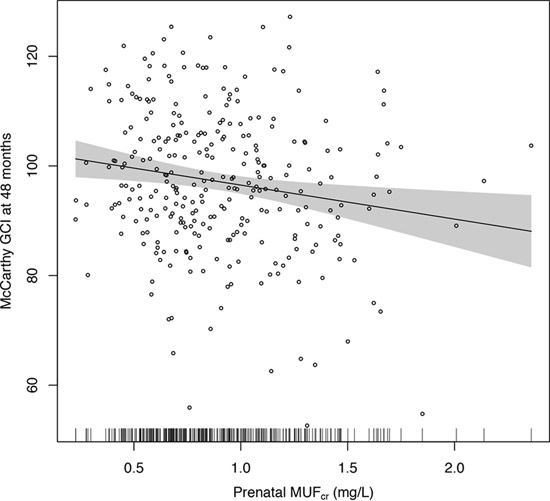
Now we can add yet another study to this ever-growing list. This study,8,9,10,11 published in Environmental Health Perspectives last month, found a correlation between fluoride exposure in utero and subsequent reductions in cognitive function at the ages of 4 and 6 through 12. Each 0.5 mg/L increase in fluoride over 0.8 mg/L in the mother's urine was associated with a 2.5-point reduction in IQ and a 3.15-point reduction in general cognitive index (GCI) scores in the child, leading the authors to conclude that:
"… higher prenatal fluoride exposure, in the general range of exposures reported for other general population samples of pregnant women and nonpregnant adults, was associated with lower scores on tests of cognitive function in the offspring at age 4 and 6-12 y[ears]."

Prenatal Exposure More Hazardous Than Childhood Exposure

According to lead author Howard Hu, founding dean of the Dalla Lana School of Public Health at the University of Toronto, this is one of the largest, longest and most rigorously executed studies on fluoride and neurodevelopment ever conducted. The data was collected from nearly 300 Mexican mothers and their children.
While Mexico does not fluoridate drinking water, Mexicans are still exposed to many other sources of fluoride, including naturally-occurring fluoride in water, fluoridated salt, dental products, supplements, pesticides and tea.
Importantly, the researchers found that prenatal exposure was far more influential with respect to cognitive function than subsequent fluoride exposure during childhood. As noted by Hu, "the fetal system tends to be more sensitive to environmental toxicants than once the child is born," and this study supports that view. According to Connett:
"This is the biggest moment for us since the Fluoride Action Network was formed in 2000. It vindicates the concerns we have had on fluoride's neurotoxicity since Mullenix's study on animal behavior in 1995 and the first two Chinese studies on IQ published in 1996."
The mean level of fluoride in the urine of the mothers included in the study was 0.9 mg/L. In the U.S. 75 percent of the population's drinking water is fluoridated, and according to Hu, the levels of fluoride found in Mexican mothers is unlikely to be significantly different from those found in American women.
Despite that, the American Dental Association (ADA) is still refusing to see the light and commented on the study saying its findings "are not applicable to the U.S.," and that the ADA "continues to endorse fluoridation of public water as the most effective public health measure to prevent tooth decay."12 How the ADA can prioritize the prevention of tooth decay over IQ loss is simply incomprehensible.
This is especially outrageous in light of research13 showing fluoride only works — and inefficiently at that — when used topically. It has no beneficial effects on teeth when ingested. Besides, there are far more effective and safer options for decreasing tooth decay than using a topical poison or ingesting a harmful industrial pollutant!

IQ Loss From Fluoride Exposure Is Significant

According to Connett, the featured study is very important, as it reveals the loss of IQ is quite large. Essentially, a child of a mother drinking water with 1 part per million (ppm) of fluoride would be predicted to have an IQ that is 5 to 6 points lower than a child born to a mother who drank fluoride-free water.
Another important point to be made with regard to this study is that they measured fluoride in urine, which is a far more accurate indicator of total fluoride intake than simply measuring the concentration of fluoride in drinking water, and then calculating how much water is being consumed.
When drinking water is the dominant source of fluoride, then fluoride concentrations in urine and water are typically about the same. Hence, a mean urine fluoride level of 0.9 mg/L implies these women were ingesting the same amount of fluoride as women drinking water with a fluoride level of 0.9 mg/L — just 0.2 mg/L above the currently recommended level for drinking water in the U.S.
When you factor in the range of fluoride exposures in the study, the exposure is likely very close to the range found in many fluoridated areas of the U.S. In a personal email to me, Connett writes:
"The doses in this study are directly applicable to areas with artificial fluoridation. There is no need to extrapolate downward from effects at higher doses. The claims by fluoridation defenders that only studies using much higher doses than occur in areas with artificial fluoridation have shown a loss of IQ are squarely refuted by this study.
Those false claims range from 11 times to 30 times higher, but are based on the logical fallacy that it is the highest dose amongst several studies that is relevant, when it is the LOWEST dose amongst studies that is most relevant."

NIEHS Study Confirms Earlier Results, Necessitating Action

The study also controlled for a wide range of factors — including lead, mercury, socioeconomic status, smoking, alcohol use and pregnancy-related problems — that could potentially skew the results or produce a false effect. Importantly, the researchers were able to largely rule out the influence of these confounding factors. It also confirms the results of earlier, less sophisticated studies done in Mexico and China, which have been criticized for their shortcomings. According to Connett:
"Some of those studies had higher fluoride exposures than commonly found in the U.S., but many did not. The sole study in a country with artificial water fluoridation (as opposed to artificial salt fluoridation, which was likely a main source of fluoride in this new study) was by Broadbent in New Zealand.
That study found no association between water fluoridation and IQ and was trumpeted by fluoridation defenders. But that study was shown to have almost no difference in TOTAL fluoride intake between the children with fluoridated water and those with unfluoridated water, since most of the children drinking unfluoridated water were given fluoride supplements."
Hu and his co-authors are cautious in their conclusions, and this is to be expected. But that does not detract from the fact that the implications of this study are enormous. No singular study can prove fluoride lowers IQ when consumed in doses found in fluoridated areas, but when you add it to previous studies, it's clearly raises a bright red flag.

Study Shows Linear Relationship Between In Utero Fluoride Exposure and IQ Loss

Another really important finding that is being downplayed or entirely ignored by mainstream media is the fact that there was no threshold below which fluoride did not affect IQ. The study explains this as follows:
"The smooth plot of the association between GCI [editor's note: IQ test at age 4] and maternal prenatal urinary fluoride from an adjusted GAM model [editor's note: a model that corrects for extraneous factors] suggested a linear relation over the exposure distribution (Figure 2)."
gci-at-48-months
In a nutshell, this means that as the level of fluoride in urine increased, IQ decreased — across the entire range of exposures, from lowest to highest. This in turn means there's no level at which there will not be some kind of detrimental effect on cognition — it's just a matter of degree.
Remarkably, the ADA tries to brush off these results by saying it doesn't apply to Americans drinking fluoridated water because the source of the fluoride was unidentified. As noted by Connett, "This makes no sense. It is irrelevant whether the Mexican women got their fluoride from fluoridated salt, fluoride in drinking water, or from fluoridated dental products."

The Many Ways in Which Fluoride Harms Children's Brain Function

As mentioned, there are now hundreds of studies showing fluoride damages brain function, in a variety of different ways. Among the proposed mechanisms of harm, studies have shown fluoride can:14
Interfere with basic functions of nerve cells in the brain
Reduce nicotinic acetylcholine receptors
Reduce lipid content in the brain
Damage the pineal gland through fluoride accumulation
Impair antioxidant defense systems
Damage the hippocampus
Damage purkinje cells
Increase uptake of aluminum, which has neurotoxic effects
Encourage formation of beta-amyloid plaques (the classic brain abnormality in Alzheimer's disease)
Exacerbate lesions induced by iodine deficiency
Increase manganese absorption, which has also been linked lower IQ in children
Impair thyroid function, which can also affect brain development

Fluoride Is an Unapproved Drug

If everyone knew the dangers of fluoride and had a choice, most would likely opt for fluoride-free drinking water. Unfortunately, you don't have that choice if you live in an area that adds fluoride to its municipal water supply. Whether you want it or not, you're being medicated with a substance known to have toxic effects.
It's important to remember that fluoride is in fact a drug, since it's used to prevent a disease (tooth decay), and no other drug has ever been administered as a public health measure across the board without regard for age, sex, medical need and other factors that might place you at increased risk for side effects. Patients who are prescribed drugs must be medically monitored, yet in the case of fluoride, no one is tracking anything.
Once you put fluoride in the water, there is no way to control who gets it and how much, and if you suffer side effects, there's no recourse. Most don't even realize that their health problems might be connected to fluoride toxicity. Fluoride in water is not even regulated by the U.S. Food and Drug Administration (FDA), even though it regulates fluoride in toothpaste and other oral care products, which must bear warning labels about the danger of ingesting those products.
The FDA does not even recognize fluoride supplements (which, like water, are ingested) as safe and effective. In fact, to this day the FDA classifies them as "unapproved new drugs." Last year, the FDA clamped down on pharmacies selling and misrepresenting unapproved fluoride supplements.
They also issued a warning letter to a fluoride supplement manufacturer, demanding it cease making the product because it's an unapproved drug — hence it is illegal to manufacture and sell. So, how is it that fluoride can still be added to water supplies across the U.S. for the purpose of preventing tooth decay — a purpose that in the eyes of the FDA renders it a drug, and one which they've never approved as safe or effective? It's a most curious situation that no one appears to have the answer to.

Water Fluoridation Is a Violation of Freedom of Choice

Water fluoridation is an absolute violation of your freedom of choice — to take a drug or not, and a toxic one at that. Fluoroquinolones (fluoride-containing antibiotic- and antimicrobial drugs) require FDA black-box warnings, and some of the newer ones have been withdrawn due to toxicity.15 Fluoride-containing drugs have the unique ability to penetrate your central nervous systemincluding your brain, which is often why fluoride is used in the formulation.
So, why should we think fluoride in water won't affect the brain? In light of all the evidence, it's high time we cease this careless and dangerous public health practice. It's bad medicine that is doing far more harm than good.
Moreover, the types of fluoride typically added to water supplies are not even "clean" pharmaceutical grade fluoride — which is toxic enough — but rather the chemical byproducts of aluminum, steel, cement, phosphate fertilizer and nuclear weapons manufacturing. These fluoride chemicals have been shown to contain all sorts of toxic contaminants, including lead, arsenic, radionucleotides and aluminum.
To learn more about fluoride and how you can help end this harmful practice, I highly recommend getting a copy of Connett's book, The Case Against Fluoride. You can also download my free report on water fluoridation for more information on the bad science and political agendas that got this toxic chemical in our drinking water.