Monday, October 9, 2017

"Real Science" Questions Cosmology

Here's an interesting Popular Science reprint. Those of us who study vortices and toroidal space-time cosmology will especially appreciate Matei Apostolescu's illustrations, particularly the "smooth operator."
[for some reason, all of the images associated with this article have been removed from the internet. hmmm...  I'm inserting a fresh image to replace the ones removed.]


C

osmologists used to think the universe was totally timeless: no beginning, no end. That might sound mind-melting, but it’s easier on the scientific brain than figuring out what a set starting point would mean, let alone when it would be. So some physicists have cooked up alternative cosmological theories that make time’s role seem a little less important. The concepts are as trippy as those black-light posters you had in college. Wait a minute…

Flowers of the multiverse

The main reason some physicists obsess over the beginning of the universe is because so much evidence points to there being one. But what if our universe grooved within an ageless multiverse—like a patch of ground from which countless flowers bloom. In this model, each universe has a big bang and keeps its own time. In the most popular version, each universe might even have its own version of physics too. Infinite possibilities yield infinite results: Some say this theory explains life itself.
We’d have to be extremely lucky for a single big bang to create a universe with the perfect conditions for life as we know it, but if new universes are springing up all the time, it’s no wonder one of those cosmic neighborhoods turned out just like ours. The universes in this garden grow or wither according to their own rules, while the multiverse around them goes on without a beginning or an end. It’s an elegant blend of change and timelessness, a floral brew many cosmologists are still sipping.

The smooth operator

Some variations on the big bang go down a little smoother than the original. In the simplest version, the beginning of time is a sharp point, where everything we currently observe was mashed into a ball of energy smaller than an atom—then burst outward, duh. But what came before? Physicists such as Stephen Hawking tried to restore a kind of timelessness by getting rid of that starting point, imagining a universe with no clear “bang.” You can wind back the clock to the edges of those first moments of existence, but asking what came before would be like asking why you can keep walking north when you get to the North Pole. Time, as we define it, loses its meaning as the universe shrinks down.
It never quite narrows to a single point. But no one has proved physics works like that—yet.
Steady state
The big bang posits that the universe exploded into existence and is still booming outward. So to throw out the bang, you must explain why we can see galaxies shooting off into the distance. In 1948, astronomers Hermann Bondi, Thomas Gold, and Fred Hoyle got around the problem by imagining the universe as a constant display of dazzling fireworks, with new matter bursting into existence everywhere, at every moment. In the steady-state model, it looks like the cosmos is growing, but change is just an illusion, man.
The universe is literally spacing out, yeah, but it’s not because of some single original event. It’s because the universe is constantly creating new matter, and that new matter pushes the older stuff out into the beyond. But the discovery of microwave radiation left over from the big bang during the 1960s cooked this idea—the theory couldn’t explain away that afterglow.

The collision

Why does a big bang have to be a beginning? Paul Steinhardt and collaborators propose that there are bangs bangin’ all the time, as our universe rattles around in a fifth dimension (whoa) our puny minds cannot even perceive. All of space and time as we know it sits on a four-dimensional surface called a brane. Sometimes it collides with another universe’s brane, and the smash creates bursts of energy we know as the big bang—energy still detectable as cosmic background radiation. As the universes move farther and farther apart in the fifth dimension, our cosmos expands. The cycles of collision and separation go on forever in a psychedelic dance. Many cosmologists don’t think we’ll ever find proof of this fifth dimension, but the idea that the big bang isn’t the real beginning has no end in sight.
 This article was originally published in the September/October 2017 Mysteries of Time and Space issue ofPopular Science.
tags: 

Tuesday, October 3, 2017

Fluoride Exposure in the Womb Lowers IQ in Children

First, let me apologize profusely to my blog followers for cyd's low output the past year or so. My heart was too heavy with grief to follow my own advice of "onward and upward." About the best I've been able to do for you is forward the occasional post from Dr. Mercola's website. I have numerous paper-scrap seeds of articles ideas; soon they will bloom again. In the meantime, here's another article from Dr. Mercola.

I can't tell you how many otherwise educated people have looked at me cross-eyed whenever I warn them about fluoride. Please, read and heed.

Maternal Fluoride Exposure During Pregnancy Correlates to Lower IQ in Their Children

Story at-a-glance

  • Fluoride is an endocrine-disrupting chemical linked to thyroid disease, impaired memory, attention-deficit hyperactive disorder and lowered IQ in children
  • A long-term study sponsored by the U.S. National Institute of Environmental Health Sciences found a correlation between fluoride exposure in utero and subsequent reductions in cognitive function
  • Each 0.5 mg/L increase in fluoride over 0.8 mg/L in the mother’s urine was associated with a 2.5-point reduction in IQ and a 3.15-point reduction in general cognitive index scores in the child
  • As the level of fluoride increased, IQ decreased — across the full range of exposures — which means there’s no level at which there is no detrimental effect on cognition; it’s only a matter of degree
  • In 2015, the recommended level of fluoride in drinking water in the U.S. was lowered to reduce symptoms of overexposure, from an upper limit of 1.2 mg/L to 0.7 mg/L, but even this level is likely placing children’s brain development and function at risk

By Dr. Mercola
Many still do not realize the proven health risks inherent with fluoridated water, but the information is spreading. Beginning in 1945, it was claimed that adding fluoride to drinking water was a safe and effective way to improve people's dental health. Over the decades, many bought into this hook, line and sinker, despite all the evidence to the contrary.
Scientific investigations have revealed that fluoride is an endocrine-disrupting chemical,1 and have linked it to the rising prevalence of thyroid disease.2 Importantly, fluoride has been identified as a developmental neurotoxin that impacts short-term and working memory, contributes to rising rates of attention-deficit hyperactive disorder (ADHD)3 and lowered IQ in children.4
Now, a new, long-term multimillion-dollar study sponsored by the U.S. National Institute of Environmental Health Sciences (NIEHS) and conducted by a research team that has produced over 50 papers on the effects of environmental exposures on children's cognitive health, sheds light on the price children pay when mothers are exposed to fluoride during pregnancy.
As noted by Paul Connett, Ph.D., toxicologist, environmental chemist and former director of the Fluoride Action Network (FAN) in the video commentary above (while retiring and handing over the director's position to his son Michael, Connett remains very active in the organization):
"This should spell the end of water fluoridation worldwide. How can you possibly continue to expose millions of pregnant women and children to a known neurotoxic substance, now that you know there's a relationship between how much fluoride a woman is exposed to in pregnancy and the IQ of the children born to them?"

Lowered Fluoridation Level Still Too High

In April 2015, the U.S. government admitted the "optimal" level of fluoride recommended since 1962 had in fact been too high, resulting in over 40 percent of American teens having dental fluorosis — a sign of fluoride overexposure. In some areas, dental fluorosis rates are as high as 70 to 80 percent, with some children suffering from advanced forms.
As a result of these findings, the U.S. Department of Health and Human Services (HHS) lowered its recommended level of fluoride in drinking water by 40 percent, from an upper limit of 1.2 milligrams per liter (mg/L) to 0.7 mg/L.5
The HHS will re-evaluate dental fluorosis rates among children again around 2025, to assess whether they were correct about this new level being protective against dental fluorosis. However, even if 0.7 mg/L lowers incidence of dental fluorosis, the current study clearly shows this does NOT mean it's a safe level overall.

Prenatal Fluoride Exposure Lowers IQ in Children

In a complaint filed against the U.S. Environmental Protection Agency in response to its denial of a petition to ban water fluoridation, FAN, along with a coalition of environmental and public health groups, presented the agency with more than 180 studies showing fluoride causes neurotoxic harm and reduced IQ in children.6
Many of these studies found harm at levels within the range, or precariously close to, the levels millions of American children receive on a regular basis. All in all, there are more than 300 animal and human studies demonstrating fluoride can cause:7
  • Brain damage, especially when coupled with iodine deficiency or excessive levels of aluminum
  • Reduced IQ
  • Impaired ability to learn and remember
  • Neurobehavioral deficits such as impaired visual-spatial organization
  • Impaired fetal brain development
Now we can add yet another study to this ever-growing list. This study,8,9,10,11 published in Environmental Health Perspectives last month, found a correlation between fluoride exposure in utero and subsequent reductions in cognitive function at the ages of 4 and 6 through 12. Each 0.5 mg/L increase in fluoride over 0.8 mg/L in the mother's urine was associated with a 2.5-point reduction in IQ and a 3.15-point reduction in general cognitive index (GCI) scores in the child, leading the authors to conclude that:
"… higher prenatal fluoride exposure, in the general range of exposures reported for other general population samples of pregnant women and nonpregnant adults, was associated with lower scores on tests of cognitive function in the offspring at age 4 and 6-12 y[ears]."

Prenatal Exposure More Hazardous Than Childhood Exposure

According to lead author Howard Hu, founding dean of the Dalla Lana School of Public Health at the University of Toronto, this is one of the largest, longest and most rigorously executed studies on fluoride and neurodevelopment ever conducted. The data was collected from nearly 300 Mexican mothers and their children.
While Mexico does not fluoridate drinking water, Mexicans are still exposed to many other sources of fluoride, including naturally-occurring fluoride in water, fluoridated salt, dental products, supplements, pesticides and tea.
Importantly, the researchers found that prenatal exposure was far more influential with respect to cognitive function than subsequent fluoride exposure during childhood. As noted by Hu, "the fetal system tends to be more sensitive to environmental toxicants than once the child is born," and this study supports that view. According to Connett:
"This is the biggest moment for us since the Fluoride Action Network was formed in 2000. It vindicates the concerns we have had on fluoride's neurotoxicity since Mullenix's study on animal behavior in 1995 and the first two Chinese studies on IQ published in 1996."
The mean level of fluoride in the urine of the mothers included in the study was 0.9 mg/L. In the U.S. 75 percent of the population's drinking water is fluoridated, and according to Hu, the levels of fluoride found in Mexican mothers is unlikely to be significantly different from those found in American women.
Despite that, the American Dental Association (ADA) is still refusing to see the light and commented on the study saying its findings "are not applicable to the U.S.," and that the ADA "continues to endorse fluoridation of public water as the most effective public health measure to prevent tooth decay."12 How the ADA can prioritize the prevention of tooth decay over IQ loss is simply incomprehensible.
This is especially outrageous in light of research13 showing fluoride only works — and inefficiently at that — when used topically. It has no beneficial effects on teeth when ingested. Besides, there are far more effective and safer options for decreasing tooth decay than using a topical poison or ingesting a harmful industrial pollutant!

IQ Loss From Fluoride Exposure Is Significant

According to Connett, the featured study is very important, as it reveals the loss of IQ is quite large. Essentially, a child of a mother drinking water with 1 part per million (ppm) of fluoride would be predicted to have an IQ that is 5 to 6 points lower than a child born to a mother who drank fluoride-free water.
Another important point to be made with regard to this study is that they measured fluoride in urine, which is a far more accurate indicator of total fluoride intake than simply measuring the concentration of fluoride in drinking water, and then calculating how much water is being consumed.
When drinking water is the dominant source of fluoride, then fluoride concentrations in urine and water are typically about the same. Hence, a mean urine fluoride level of 0.9 mg/L implies these women were ingesting the same amount of fluoride as women drinking water with a fluoride level of 0.9 mg/L — just 0.2 mg/L above the currently recommended level for drinking water in the U.S.
When you factor in the range of fluoride exposures in the study, the exposure is likely very close to the range found in many fluoridated areas of the U.S. In a personal email to me, Connett writes:
"The doses in this study are directly applicable to areas with artificial fluoridation. There is no need to extrapolate downward from effects at higher doses. The claims by fluoridation defenders that only studies using much higher doses than occur in areas with artificial fluoridation have shown a loss of IQ are squarely refuted by this study.
Those false claims range from 11 times to 30 times higher, but are based on the logical fallacy that it is the highest dose amongst several studies that is relevant, when it is the LOWEST dose amongst studies that is most relevant."

NIEHS Study Confirms Earlier Results, Necessitating Action

The study also controlled for a wide range of factors — including lead, mercury, socioeconomic status, smoking, alcohol use and pregnancy-related problems — that could potentially skew the results or produce a false effect. Importantly, the researchers were able to largely rule out the influence of these confounding factors. It also confirms the results of earlier, less sophisticated studies done in Mexico and China, which have been criticized for their shortcomings. According to Connett:
"Some of those studies had higher fluoride exposures than commonly found in the U.S., but many did not. The sole study in a country with artificial water fluoridation (as opposed to artificial salt fluoridation, which was likely a main source of fluoride in this new study) was by Broadbent in New Zealand.
That study found no association between water fluoridation and IQ and was trumpeted by fluoridation defenders. But that study was shown to have almost no difference in TOTAL fluoride intake between the children with fluoridated water and those with unfluoridated water, since most of the children drinking unfluoridated water were given fluoride supplements."
Hu and his co-authors are cautious in their conclusions, and this is to be expected. But that does not detract from the fact that the implications of this study are enormous. No singular study can prove fluoride lowers IQ when consumed in doses found in fluoridated areas, but when you add it to previous studies, it's clearly raises a bright red flag.

Study Shows Linear Relationship Between In Utero Fluoride Exposure and IQ Loss

Another really important finding that is being downplayed or entirely ignored by mainstream media is the fact that there was no threshold below which fluoride did not affect IQ. The study explains this as follows:
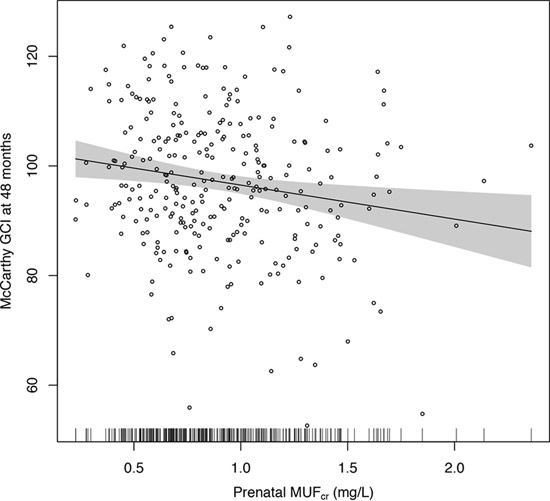
"The smooth plot of the association between GCI [editor's note: IQ test at age 4] and maternal prenatal urinary fluoride from an adjusted GAM model [editor's note: a model that corrects for extraneous factors] suggested a linear relation over the exposure distribution (Figure 2)."
gci-at-48-months
In a nutshell, this means that as the level of fluoride in urine increased, IQ decreased — across the entire range of exposures, from lowest to highest. This in turn means there's no level at which there will not be some kind of detrimental effect on cognition — it's just a matter of degree.
Remarkably, the ADA tries to brush off these results by saying it doesn't apply to Americans drinking fluoridated water because the source of the fluoride was unidentified. As noted by Connett, "This makes no sense. It is irrelevant whether the Mexican women got their fluoride from fluoridated salt, fluoride in drinking water, or from fluoridated dental products."

The Many Ways in Which Fluoride Harms Children's Brain Function

As mentioned, there are now hundreds of studies showing fluoride damages brain function, in a variety of different ways. Among the proposed mechanisms of harm, studies have shown fluoride can:14
Interfere with basic functions of nerve cells in the brain
Reduce nicotinic acetylcholine receptors
Reduce lipid content in the brain
Damage the pineal gland through fluoride accumulation
Impair antioxidant defense systems
Damage the hippocampus
Damage purkinje cells
Increase uptake of aluminum, which has neurotoxic effects
Encourage formation of beta-amyloid plaques (the classic brain abnormality in Alzheimer's disease)
Exacerbate lesions induced by iodine deficiency
Increase manganese absorption, which has also been linked lower IQ in children
Impair thyroid function, which can also affect brain development

Fluoride Is an Unapproved Drug

If everyone knew the dangers of fluoride and had a choice, most would likely opt for fluoride-free drinking water. Unfortunately, you don't have that choice if you live in an area that adds fluoride to its municipal water supply. Whether you want it or not, you're being medicated with a substance known to have toxic effects.
It's important to remember that fluoride is in fact a drug, since it's used to prevent a disease (tooth decay), and no other drug has ever been administered as a public health measure across the board without regard for age, sex, medical need and other factors that might place you at increased risk for side effects. Patients who are prescribed drugs must be medically monitored, yet in the case of fluoride, no one is tracking anything.
Once you put fluoride in the water, there is no way to control who gets it and how much, and if you suffer side effects, there's no recourse. Most don't even realize that their health problems might be connected to fluoride toxicity. Fluoride in water is not even regulated by the U.S. Food and Drug Administration (FDA), even though it regulates fluoride in toothpaste and other oral care products, which must bear warning labels about the danger of ingesting those products.
The FDA does not even recognize fluoride supplements (which, like water, are ingested) as safe and effective. In fact, to this day the FDA classifies them as "unapproved new drugs." Last year, the FDA clamped down on pharmacies selling and misrepresenting unapproved fluoride supplements.
They also issued a warning letter to a fluoride supplement manufacturer, demanding it cease making the product because it's an unapproved drug — hence it is illegal to manufacture and sell. So, how is it that fluoride can still be added to water supplies across the U.S. for the purpose of preventing tooth decay — a purpose that in the eyes of the FDA renders it a drug, and one which they've never approved as safe or effective? It's a most curious situation that no one appears to have the answer to.

Water Fluoridation Is a Violation of Freedom of Choice

Water fluoridation is an absolute violation of your freedom of choice — to take a drug or not, and a toxic one at that. Fluoroquinolones (fluoride-containing antibiotic- and antimicrobial drugs) require FDA black-box warnings, and some of the newer ones have been withdrawn due to toxicity.15 Fluoride-containing drugs have the unique ability to penetrate your central nervous systemincluding your brain, which is often why fluoride is used in the formulation.
So, why should we think fluoride in water won't affect the brain? In light of all the evidence, it's high time we cease this careless and dangerous public health practice. It's bad medicine that is doing far more harm than good.
Moreover, the types of fluoride typically added to water supplies are not even "clean" pharmaceutical grade fluoride — which is toxic enough — but rather the chemical byproducts of aluminum, steel, cement, phosphate fertilizer and nuclear weapons manufacturing. These fluoride chemicals have been shown to contain all sorts of toxic contaminants, including lead, arsenic, radionucleotides and aluminum.
To learn more about fluoride and how you can help end this harmful practice, I highly recommend getting a copy of Connett's book, The Case Against Fluoride. You can also download my free report on water fluoridation for more information on the bad science and political agendas that got this toxic chemical in our drinking water.

Tuesday, August 15, 2017

Here is more damning evidence against Monsanto and their anti-scientific tactics to sell products that are KILLING YOU and YOUR FAMILY and YOUR PETS!  This article is a reprint from Dr. Mercola's website:
By Dr. Mercola
A common corporate tactic, well-honed by the tobacco industry, is to use “third-party experts” to bring the industry’s message to the public under the cloak of independent opinion or expertise. The idea is that academic types are far more credible than industry employees when it comes to defending the industry’s position.
Over the years, I’ve written about many of these so-called “independent experts” that turned out to be anything but. Among them is Henry Miller, who was thoroughly outed as a Monsanto shill during the 2012 Proposition 37 GMO labeling campaign in California.

Henry Miller Outed as Monsanto Puppet — Again

The industry-funded “No on Prop 37” placed Miller front and center of its campaign, breaking all sorts of rules in the process. As the Los Angeles Times1 reported at the time, a No on 37 advertisement had to be pulled off the air because Miller was fraudulently identified as being part of the Stanford University faculty. Behind him in the shot was Stanford’s recognizable vaulted campus walkway.
Alas, not only is Miller not a Stanford professor (he’s a research fellow at the Hoover Institution, a conservative think tank that just happens to be housed on the Stanford campus), Stanford also has a policy to not take positions on candidates or ballot measures, and does not allow political filming on campus.
Aside from promoting genetically engineered (GE) foods (he was actually the founding director of the U.S. Food and Drug Administration’s Office of Biotechnology), Miller also has a long history2 of defending toxic chemicals such as neonicotinoid pesticides, DDT and cigarettes.
He’s even penned articles suggesting radioactive fallout might be beneficial for health, while claiming “Organic agriculture is to the environment what cigarette smoking is to human health” — apparently momentarily forgetting he’s defended the safety of cigarette smoking.3
Miller is also a friend of the infamous industry front group American Council for Science and Health (ACSH), which has defended everything from fracking and pesticides to bisphenol-A and GE foods. Now, Miller has made less than flattering headlines yet again — this time for being fired by Forbes Magazine for submitting articles ghostwritten by Monsanto.

Unethical Ghostwriting More Common Than You Might Suspect

Monsanto isn’t feeding the world as they claim, but they sure are spoon-feeding scientists, academics and journalists. This shameful practice is far more common than anyone would like to think. Fortunately, Forbes had the integrity to do something about it this time.
That doesn’t always happen. The evidence4 against Miller emerged during the court-ordered discovery process of a class action lawsuit against Monsanto by people who claim they developed non-Hodgkin’s lymphoma as a result of glyphosate exposure (the active ingredient in Monsanto’s Roundup herbicide, used by farmers and home gardeners alike).
The documents, more than 700 pages in all, were posted online by the law firm Baum Hedlund Aristei Goldman,5 which states the documents “allow people to see what is happening ‘behind the curtain’ of secrecy that normally shrouds ongoing litigation … These documents tell an alarming story of ghostwriting, scientific manipulation, collusion with the Environmental Protection Agency, and previously undisclosed information about how the human body absorbs glyphosate.” As reported by The New York Times:6
“Documents show that Henry I. Miller … asked Monsanto to draft an article for him that largely mirrored one that appeared under his name on Forbes’s website in 2015 … A similar issue appeared in academic research.
An academic involved in writing research funded by Monsanto, John Acquavella, a former Monsanto employee, appeared to express discomfort with the process, writing in a 2015 email to a Monsanto executive, ‘I can’t be part of deceptive authorship on a presentation or publication.’ He also said of the way the company was trying to present the authorship: ‘We call that ghost writing and it is unethical.’”

Miller Fired for Submitting Ghostwritten Material 

While there’s controversy about the legality of the release of these internal emails by plaintiff’s attorneys to the public,7 Forbes’ response was swift. Faced with evidence they’d published material under Miller’s name that was in fact ghostwritten by Monsanto, Forbes not only fired Miller but also removed all of his work from their site.
The article in question, published in 2015, attacked the findings of the International Agency for Research on Cancer, a branch of the World Health Organization, which had classified glyphosate as a probable human carcinogen. Email correspondence reveals Monsanto asked Miller if he’d be willing to write an article on the findings, to which he replied “I would be if I could start from a high-quality draft.”
The subsequent article, which was near-identical to Monsanto’s draft, was published in Millers name, with no mention of Monsanto involvement.8 Forbes’ site expressly states that “opinions expressed by Forbes Contributors are their own,” which in this case clearly was not true. Mia Carbonell, a Forbes spokeswoman, told The New York Times:  
“All contributors to Forbes.com sign a contract requiring them to disclose any potential conflicts of interest and only publish content that is their own original writing. When it came to our attention that Mr. Miller violated these terms, we removed his blog from Forbes.com and ended our relationship with him.”

Correspondence Reveals Internal Knowledge of Roundup Dangers

The released email correspondence also reveals Monsanto executives are clearly aware there are safety concerns with Roundup as a formulation, and its main ingredient, glyphosate, and have been for well over 15 years. As noted in the featured article:9
“‘In a 2002 email, a Monsanto executive said, ‘What I’ve been hearing from you is that this continues to be the case with these studies — Glyphosate is O.K. but the formulated product (and thus the surfactant) does the damage.’
In a 2003 email, a different Monsanto executive tells others, ‘You cannot say that Roundup is not a carcinogen … we have not done the necessary testing on the formulation to make that statement.’ She adds, however, that ‘we can make that statement about glyphosate and can infer that there is no reason to believe that Roundup would cause cancer.’”

Proof of Industry Involvement in Retraction of Damning Research 

The documents also show Monsanto pressured A. Wallace Hayes, then-editor of the journal Food and Chemical Toxicology, to retract a damning animal study by professor Gilles-Eric Séralini, which showed Roundup and GE corn caused cancer and early death. Hayes, it turns out, had entered into a contract with Monsanto shortly before the coordinated retraction campaign began.
While Hayes denies Monsanto had anything to do with his controversial and widely criticized decision to retract Séralini’s study, the email correspondence suggests otherwise.10 As noted by GM Watch:11  
“Back in 2012, GMWatch founder Jonathan Matthews exposed the industry links of the supposedly independent scientists who lobbied the journal editor to retract the Séralini paper. Now we have first-hand proof of Monsanto’s direct involvement …  [Monsanto scientist David] Saltmiras ... writes of how ‘Throughout the late 2012 Séralini rat cancer publication and media campaign, I leveraged my relationship [with] the Editor i[n] Chief of the publishing journal …
Another Monsanto employee, Eric Sachs, writes … about his efforts to galvanize scientists in the letter-writing campaign … Sachs writes: ‘I talked to Bruce Chassy and he will send his letter to Wally Hayes directly and notify other scientists that have sent letters to do the same. He understands the urgency …
I remain adamant that Monsanto must not be put in the position of providing the critical analysis that leads the editors to retract the paper’ … Sachs is keen to ensure that Monsanto is not publicly seen as attempting to get the paper retracted, even though that is precisely what it is doing. Sachs writes to Monsanto scientist William Heydens: ‘
There is a difference between defending science and participating in a formal process to retract a publication that challenges the safety of our products. We should not provide ammunition for Séralini, GM critics and the media to charge that Monsanto used its might to get this paper retracted. The information that we provided ... makes a strong case that the paper should not have passed peer review.”

Forbes Has Many Shills

Ironically, as recently as November 2016, Miller delivered a critical salvo against a New York Times article in which Pulitzer Prize winning journalist Danny Hakim argued that GE agriculture is a failure because it has neither reduced pesticide usage nor led to increases in yields. Miller was one of the “independent experts” contacted for rebuttal by Forbes contributor Kavin Senapathy. She writes:12
“… Miller tells me via email that ‘[t]he senior management at the Times takes valid criticism seriously, especially when it contains terms like 'bias,' 'dishonesty', and 'inaccuracy.’ He expects there will be an avalanche of complaints to the Times public editor at public@nytimes.com.”
 You can contact Forbes to let them know how you feel about the biased stable of writes they hire by emailing them at readers@forbes.com. You can find similar bias in other articles at Forbes.13 14 15,16
If Forbes really wants to clean up its act, its editors would take a moment to investigate any contributing author relying solely on information from these and other known industry shills and/or industry front groups. It’s a pretty close-knit group of individuals, so the worst actors are not hard to identify based on their associations.
Besides the Genetic Literacy Project and the ACSH, both with ties to Monsanto,17 there are many other industry front groups and websites specializing in astroturfing while pretending to be independent and science oriented. That includes but is certainly not limited to the following.18
Science 2.0
Science Codex
GMO Answers
Center for Consumer Freedom
Independent Women’s Forum
Center for Inquiry
Once you start to investigate these front groups, you’ll find the same names appearing again and again, co-writing articles, interviewing each other and referring to each other’s work back and forth.
Aside from those already mentioned, well-known contributors speaking for the industry include Kevin Folta, professor and chairman of the Horticultural Sciences Department at University of Florida — who, incidentally, was also contacted by Senapathy for comment on her Forbes piece against Hakim’s “hack job on GMOs,” and Keith Kloor.19

Why Lack of Trust in Science Is Warranted

It’s bad enough that most published research findings turn out to be false due to poor design or bias, organizations such as these willfully promote flawed or flat-out manufactured science to support industry goals, while attacking research that conflicts with their aims — no matter how well done that research is. Complaints have been raised that many are “losing faith” in science and just don’t trust it anymore. Considering the evidence, this makes perfect sense, as so much of it IS false.
As noted in a 2005 paper20 titled, “Why Most Published Research Findings Are False,” published in PLOS Medicine, John Ioannidis notes: “Simulations show that for most study designs and settings, it is more likely for a research claim to be false than true. Moreover, for many current scientific fields, claimed research findings may often be simply accurate measures of the prevailing bias.”
While science in general fails to hit the truth squarely on the head even under the best of circumstances, the chances of an industry-funded study being wrong is FAR greater than one done by independent researchers, who tend to be less vested in the outcome. There’s really no disputing this.
Not only has funding bias been repeatedly demonstrated in studies looking at funding and study outcomes, if it weren’t true, the industry would not go to such great lengths to secretly hire academics, researchers and journalists to pretend as if they’re speaking as independent experts. Nor would any of these front groups exist — groups pretending to be grassroots efforts by concerned citizens or organizations by science-loving academics, and so on. They wouldn’t be necessary if industry-backed science were trustworthy.

Illegitimate Science and Fake Journalism Are a Real Threat

The fact of the matter is, these front groups and paid lackeys are not dealing in legitimate science or journalism. To hide that fact, they try to intimidate and shame people as “science-deniers.” Regardless of how this class action lawsuit against Monsanto pans out, it has done a great public service, revealing just how far companies like Monsanto will go to deceive, and the amount of human suffering they’re willing to cause in the name of profitability with nary a thought of remorse.
With the evidence before us, why should anyone trust them, or anyone involved in their scheme? As the old adage goes, “fool me once, shame on you; fool me twice, shame on me.” Some of the released emails reveal Monsanto has not properly tested its chemical formulations, and that they are in fact terrified of doing so, for fear of what might be found.
In document No. 28, Monsanto regulatory affairs manager Stephen Adams states, “With regards to the carcinogenicity of our formulations we don’t have such testing on them directly…”
This email was dated December 10, 2010. In an email dating all the way back to 2001, Mark Martens — a former Monsanto employee with a Ph.D. in pharmaceutical sciences — addresses the issue of formulation testing, saying, “I don’t know for sure how suppliers would react — but if somebody came to me and said they wanted to test Roundup I know how I would react — with serious concern. We have to really think about doing formulations even if they are not on the market …”21
According to the plaintiff attorneys, “This document is relevant and reasonably likely to be used in this litigation as it contains explicit concerns by Monsanto regarding the biological plausibility of the formulated product to cause cancer.”
Emails written by a Monsanto toxicologist also show the company did not want to conduct any kind of safety studies on glyphosate, surfactant ingredients or the formulations. Ignorance is bliss, they say, but when a company chooses to remain ignorant of its product’s dangers in order to absolve itself from responsibility for its effects, all the public gets are woes.

Wednesday, May 17, 2017

Stop Using Monstanto Roundup, People!

Here's a new article I'm reposting from the Dr. Mercola website regarding Monsanto's fraudulent science.

By Dr. Mercola
Did you know that the 2017 spending bill1,2,3 includes a rider allocating $3 million for consumer education and outreach by the U.S. Food and Drug Administration (FDA) and U.S. Department of Agriculture (USDA) to "promote understanding and acceptance of" biotechnology?
The deal was recently passed by the Senate, 79 to 18, “under a bipartisan agreement to keep the government funded through the end of September,” The Washington Post reports.4 In other words, if you are American, you are paying for Monsanto to spread their pernicious propaganda. The fact that they can get away with this and slip it in to avoid government shutdown is dystopian, to say the least.
Not only have the government and the food and chemical technology industries fought to prevent the labeling of genetically modified organisms (GMOs), your tax dollars are now to be spent on efforts to “assure” you that genetically engineered (GE) foods are of no concern.

FDA and USDA to Promote Biotech and Chemical Technologies

To quote The Washington Post, “The money is to be used to tout ‘the environmental, nutritional, food safety, economic and humanitarian impacts’ of biotech crops and their derivative food products.” This joint effort by the FDA and USDA is an outrage. As noted by Rep. Nita M. Lowey, D-N.Y., who unsuccessfully fought to get the rider struck from the bill:5
“It is not the responsibility of the FDA to mount a government-controlled propaganda campaign to convince the American public that genetically modified foods are safe. The FDA has to regulate the safety of our food supply and medical devices. They are not, nor should they be, in the pro-industry advertising business.”
A Pew Research Center study6 published last year found 39 percent of Americans believe GMO foods are worse for health than conventionally-grown foods; 55 percent believe organics are healthier than conventional; and 40 percent report eating mostly or some organic foods.
Still, nearly half of all Americans (48 percent) believe GMOs are no different from non-GMO foods and 10 percent believe GMOs are actually better for health than non-GMOs. Clearly, the chemical technology industry wants to prevent growth of anti-GMO sentiment, but using tax dollars for indoctrination purposes simply should not be permitted.

Army of Shills Steer Online Discussions

In related news, plaintiffs in a lawsuit against Monsanto say the company hired an army of shills via third parties to steer online conversations about Roundup — the chemical most commonly used on GE crops — to counter any and all negative comments with corporate propaganda, thereby manipulating and stifling public knowledge about its dangers.7 As reported by Reuters:8
“The plaintiffs alleged that Monsanto targeted all online materials and even social media comments that indicate potential dangers of its products … ‘Monsanto even started the aptly-named ‘Let Nothing Go’ program to leave nothing, not even Facebook comments, unanswered …
[T]hrough a series of third parties, it employs individuals who appear to have no connection to the industry, who in turn post positive comments on news articles and Facebook posts, defending Monsanto, its chemicals and GMOs,’ the document reads.
On a larger scale, Monsanto allegedly ‘quietly funnels money to ‘think tanks’ such as the ‘Genetic Literacy Project’ and the ‘American Council on Science and Health’ — organizations intended to shame scientists and highlight information helpful to Monsanto and other chemical producers,’ according to the plaintiffs.
The accusations are backed by a batch of emails, used in court as evidence … [Ph.D] William Moar … reportedly said at a conference in January 2015 that the company had ‘an entire department,’ dedicated to ‘debunking’ science which disagreed with the agrochemical giant’s own research.”

EPA Official Colluded With Chemical Giant on Public’s Dime

Documents entered into evidence in the lawsuits against Monsanto also strongly suggest at least one Environmental Protection Agency (EPA) official has been working on Monsanto’s behalf — another breach of public trust and misuse of public funds. After the International Agency for Research on Cancer (IARC) declared glyphosate a probable human carcinogen9,10 in 2015, Monsanto has relied on the EPA’s 2016 determination that glyphosate is “not likely to be carcinogenic” to humans.11
Based on the IARC's determination, the California agency of environmental hazards declared glyphosate a carcinogen under Proposition 65, and will require all glyphosate-containing products to carry a cancer warning.
However, evidence suggests Jess Rowland, former associate director of the EPA’s Office of Pesticide Programs (OPP), conspired with Monsanto to protect the company’s interests by manipulating and preventing toxicological investigations. Rowland was a key author of the EPA’s controversial glyphosate report, and correspondence between EPA toxicologist Marion Copley and Rowland suggests Rowland colluded with Monsanto to find glyphosate non-carcinogenic.12,13
Documents also reveal Rowland warned Monsanto of the IARC’s determination months before it was made public,14 giving the company time to plan its defense, which included a vicious, coordinated attack on the IARC,15 going so far as to calling on the U.S. government to defund the organization, despite its reputation for being the global gold-standard for carcinogenicity studies.16
In January 2017, the American Chemistry Council formed a front group called Campaign for Accuracy in Public Health Research17(CAPHR), the express purpose of which is to discredit the IARC18 and seek to reform the IARC Monographs Program, which evaluates and determines the carcinogenicity of chemicals.
The day CAPHR launched, the organization took to Twitter with a #glyphosateisvital campaign, proclaiming the weed killer is essential to “maintain the production of safe, affordable food.” All of this goes to show you simply cannot trust the information you get from social media. Many industry defenders are nothing more than sock puppets paid to spread corporate propaganda while posing as independent experts and/or well-informed regular Joes.

Corporate Ghostwriters May Have Influenced US and European Regulators

Court documents also suggest Monsanto employees ghostwrote parts of two scientific reports — one in 2000 and another in 2013 — which the EPA then relied on to conclude glyphosate is non-carcinogenic.19
This, we are expected to believe, is better science than that of the IARC — a world-renowned, global, independent research organization. These ghostwritten reports may also have influenced the European Union’s (EU) decision that Roundup was safe. According to Euro Observer:20
“A Monsanto employee admits in one of the emails that the company wrote a study on glyphosate and later attributed the work to academics. Another study on glyphosate was 'redesigned' with help of company scientists in order to create a more [favorable] outcome, the internal emails suggest.
EUobserver and OneWorld have discovered that both of the studies were relied on by the European Food Safety Authority (EFSA) when it evaluated the safety of glyphosate in 2015 as part of the EU [license] renewal process.”
Correspondence also shows Rowland helped stop an investigation into glyphosate by the Agency for Toxic Substances and Disease Registry on Monsanto’s behalf. According to the email, Rowland said he should “deserve a medal,” were he to pull it off.21,22,23 As it turns out, the review was in fact canceled, suggesting Rowland’s value to the company.
Indeed, emails suggest Monsanto was planning to lean on Rowland’s significant influence for their glyphosate defense after his retirement from the EPA,24 and Rowland’s post-EPA work indeed includes consulting for three chemical companies that are close associates of Monsanto.25,26

Dow Chemical Pulls Strings to Void Government Pesticide Findings

Monsanto clearly isn’t the only multinational company pulling strings within the U.S. government. During the Obama administration, the EPA concluded chlorpyrifos, a nerve gas-cum-pesticide made by Dow Chemical, which is widely used on citrus, applescherries and other crops, could pose health risks to consumers.
Even tiny doses were found to impact brain development in infants. A ban of the chemical’s use on food had been proposed, but the Trump-installed EPA chief, Scott Pruitt,27 recently denied the petition.28,29
Earth Justice called the decision "unconscionable," vowing to fight the decision in court. A major problem with this chemical is that it’s become a common water contaminant, and the EPA’s own evaluation found it poses serious risks to 1,778 of the 1,835 endangered plants and animals assessed.
Despite this damning evidence, a legal team representing Dow Chemical and two other organophosphate manufacturers sent letters30to the agencies responsible for joint enforcement of the Endangered Species Act,31,32,33 asking them to ignore the EPAs findings, saying the agency’s scientific basis was unreliable.
It’s interesting how on the one hand, Monsanto claims the EPA is the best judge of toxic chemicals when it suits them, while other industry giants accuse EPA scientists of not knowing what they’re doing when the evidence impacts their bottom line.
Bloomberg recently reported Dow Chemical’s first-quarter lobbying expenditures for 2017 are nearly eight times greater than its 2008 expenditures,34 and financial filings reveal the company hired a lobbying firm to meet with Congressmen in the weeks before the USDA’s and EPA’s deadline to take action on chlorpyrifos.
Trump also appointed Dow CEO Andrew Liveris to head a White House manufacturing council. All of that considered, is it any surprise that chlorpyrifos gets a free pass? With conflicts of interest such as these running the show, the health of Americans is in serious jeopardy. You simply cannot depend on government agencies to protect your best interests anymore.

International Reports Call for Global Phase Out of Pesticides

When you consider the volume of evidence against pesticides, it’s easy to understand why the chemical technology industry is so keen on having government promote their propaganda. They are losing the information war, so they’re upping the ante. Several heavy-hitting, international reports have surfaced in recent years, highlighting the serious impact agricultural chemicals are having on human health, including but not limited to the following:
According to a recent United Nations (UN) report,35 pesticides are responsible for 200,000 acute poisoning deaths each year, and chronic exposure has been linked to cancer, Alzheimer’sParkinson’s diseasehormone disruption, developmental disorders and sterility.36
The latest USDA report on pesticide residues in food reveals only 15 percent of all the food samples tested in 2015 were free from pesticide residues, compared to 41 percent the previous year.37 This goes to show just how quickly our food is being poisoned, and how significant a source food is when it comes to chemical exposures.
According to Dr. Joseph E. Pizzorno,38 founding president of the internationally recognized Bastyr University, toxins in the modern food supply are “a major contributor to, and in some cases the cause of, virtually all chronic diseases.”
The answer, the UN report says, is reducing or eliminating pesticides around the world. It proposes a global treaty to phase out toxic pesticides and transition to a more sustainable agricultural system. Contrary to industry PR, many studies have confirmed pesticide use can be significantly reduced without impacting production:39
A World Health Organization (WHO) report warns environmental pollution — which includes but is not limited to pesticides — kills 1.7 million children annually. To address this problem, the authors recommend reducing or phasing out agricultural chemicals
A report by the International Federation of Gynecology and Obstetrics40 warns that chemical exposures, which includes pesticides, now represent a major threat to human health and reproduction41,42
An Endocrine Society task force has also issued a scientific statement43,44 on endocrine-disrupting chemicals (EDCs, i.e., chemicals that alter the normal function of your hormones), noting that the health effects are such that everyone needs to take proactive steps to avoid them.
On the list of known EDCs are organophosphate pesticides and DDE, a breakdown product of DDT. Since it lingers in the environment, exposure still occurs via food even though DDT is no longer in use.
Exposure to endocrine-disrupting chemicals costs the European Union (EU) €157 billion ($172 billion) annually in women’s health care costs, infertility and male reproductive dysfunctions, birth defects, obesity, diabetes, cardiovascular disease and neurobehavioral disorders45,46,47
One in 5 cancers are thought to be due to environmental chemicals and, according to recent studies, not only can miniscule amounts of chemicals amplify each other’s adverse effects when combined,48 this even applies to chemicals deemed “safe” on their own.
Basically, the analysis49 found that the cumulative effects of non-carcinogenic chemicals can act in concert to synergistically produce carcinogenic activity — a finding that overturns and more or less nullifies conventional testing for carcinogens 

Could Your Health Be at Risk From Glyphosate-Contaminated Food?

Glyphosate-contaminated food may pose serious health risks, and this is perhaps one of the greatest selling points of organic foods. Tests by the Organic Consumers Association (OCA) show 93 percent of Americans have glyphosate in their urine,50 and food is the biggest source unless you live in an agricultural area or dispense glyphosate-based chemicals at work or at home.
Contaminated drinking water is another. Disturbingly, a recent animal study51 found Roundup causes fatty liver disease at 0.1 parts per billion (ppb) in drinking water, which is 14,000 times lower than the concentration permitted in U.S. drinking water (700 ppb). According to Health Research Institute Laboratories, the average level of glyphosate in the U.S. population is 3.3 ppb52 — 33 times higher than the level at which rats developed fatty liver.
The OCA's urine testing also suggests Americans have a daily intake of glyphosate that is about 1,000-fold higher than the level found to cause fatty liver disease in animals. Another recent study found Roundup adversely affects the development of female rats' uteruses, increasing the risk for both infertility and uterine cancer.53 So why is no action taken to protect human health?
It really boils down to the fact that without glyphosate-based herbicides the GE seed business would collapse, and chemical technology companies, with their vast resources and revolving doors into government regulatory agencies, have managed to deceive people into thinking there's no problem.

How to Get Tested for Glyphosate

The USDA promised to begin testing food for residues of glyphosate as of April 1, but then canceled the plan,54 further delaying the truth about glyphosate contamination55 from emerging.
According to Health Research Institute Laboratories, desiccated crops such as non-GMO oats, wheat, garbanzo beans and lentils can contain glyphosate levels exceeding 1,000 ppb. I recently used this test for glyphosate and had no detectable levels — likely because I eat organic foods and rarely eat at restaurants.
The Health Research Institute has developed a glyphosate test kit for public use. I've recently gained access to a limited number of these kits, and no profit is made on their sale. I provide both a glyphosate water test kit and an environmental exposure test kit in my [Dr. Mercola's] online store for those who want to assess their exposure.